For teachers and students of English

Mostrando entradas con la etiqueta esl. Mostrar todas las entradas

jueves, 7 de noviembre de 2024

Food and lifestyle


Watch the video and answer the questions.

1.  What are the main differences between Food Science and Food Technology?

2. What fields are involved in the study of Food Science?

3. What is the main aim of Food Science?

4.  Why is it important to focus on the quality of food?

5.  What are some of the fields related to Food Technology?

6.  What processes are used for the storage of food items?

7.  Why are the properties of food changed during processing?

8.  The food we eat every day depends on _________ and _________.


How bread is made


Make notes as you watch the video then explain the process.


LISTENING COMPREHENSION ACTIVITIES

domingo, 3 de diciembre de 2017

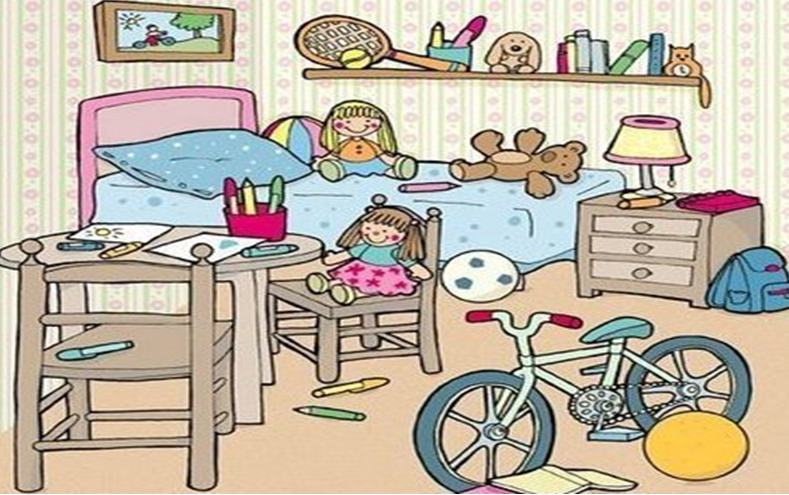
THERE IS / THERE ARE

VIDEOS

Watch and listen.


SPEAKING

1. Look at the pictures.  Describe them.  Use the table above.

2. Look at the pictures.  Ask and answer questions.  Use the table above.


WRITING

Look at the pictures.  Write sentences.

INDEPENDENT PRACTICE

ONLINE ACTIVITIES

1. DIFFICULTY: EASY                Practise THERE IS / THERE ARE

2. DIFFICULTY: MEDIUM           There is / there are

3. DIFFICULTY: DIFFICULT        Six games

miércoles, 29 de noviembre de 2017

COMPARATIVE AND SUPERLATIVE ADJECTIVES


COMPARATIVE ADJECTIVES
Video

SPEAKING:

Look at the pictures.  Write down adjectives to describe them.  Compare the two pictures, A and B.  Use Comparative adjectives and THAN.


WRITING: 

Look at the spelling rules for Comparative adjectives.


Study the spelling rules for comparative adjectives. Choose pairs of animals. Click on the links below.  Read about the animals.  Make a chart.  Compare them.


SUPERLATIVE ADJECTIVES
Video


SPEAKING:

Look at the spelling rules for Superlative adjectives.  Talk about the animals above.  Use Superlative adjectives.
WRITING:

Look at the spelling rules for Superlative adjectives.  write descriptions of the animals above.  Use Superlative adjectives.


COMPARATIVE AND SUPERLATIVE ADJECTIVES
Video

ONLINE ACTIVITIES

VIDEO, EXPLANATION, ACTIVITIES

WEBQUEST  

Click on the links below and choose the correct answers.
mountains
Earth's moon
countries
rivers
animals

INDEPENDENT PRACTICE


COMPARATIVE AND SUPERLATIVE ADJECTIVES

WORKSHEET
Rules, explanations and activities

activities

Comparing and contrasting – modifying comparatives 

Video and activity


GRADABLE AND NON-GRADABLE ADJECTIVES

quick-grammar/adjectives-gradable-non-gradable

lessons/gradable-and-ungradable-adjectives

Also check out, Big ESL ideas for small learners

viernes, 27 de octubre de 2017

Monsters, ghouls and ghosts (pre-A1 and A1)


PARTS OF THE BODY: INTRODUCTION


BIG NUMBERS REVIEW


DESCRIBING MONSTERS


GRAMMAR: HAVE GOT / HAS GOT


HALLOWEEN VOCABULARY

HALLOWEEN: PARTS OF THE BODY


HALLOWEEN GAME


ONLINE GAMES

HALLOWEEN VOCABULARY


VOCABULARY, READING AND LISTENING


WORKSHEETS

Adjectives, parts of the body, HAS / HAVE GOT, communication

Adjectives, verbs, the Present Simple Tense, communication 


lunes, 19 de septiembre de 2016

domingo, 15 de mayo de 2016

Adventure Sports, the Present Perfect Tense and more!

Dear Year 5 students,

In Unit 9 we will learn vocabulary related to adventure sports and the Beaufort Scale.  We learn a completely new grammatical structure: the Present Perfect Tense and we will read about an incredible sportswoman, Ellen MacArthur.  We will also focus on two sounds in English, /eɪ/ and /ɑ:/.

Introduction


Vocabulary


Pronunciation: Interactive phonemic chart (you must scroll down to find it)


Grammar

Review: Comparative and Superlative adjectives


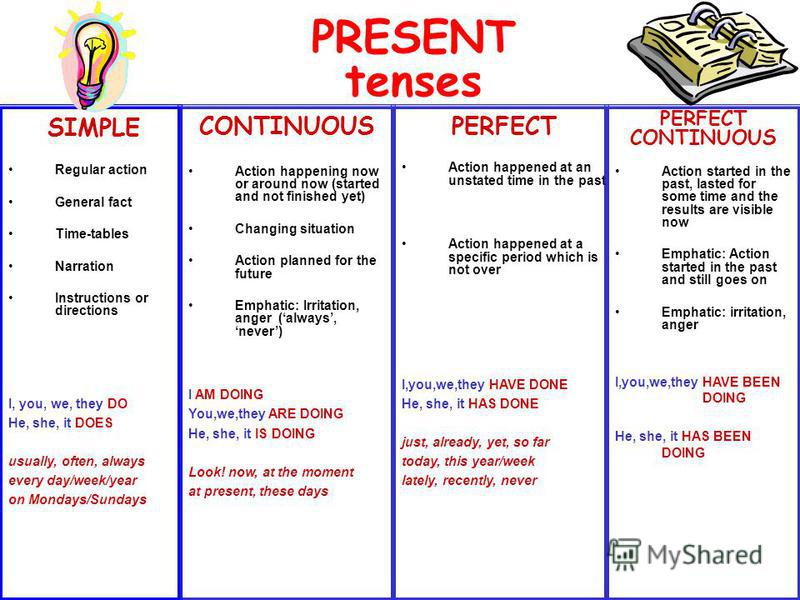
NEW GRAMMAR: Present Perfect Tense

Explanation:

Practice:
PRESENT PERFECT TENSE PRACTICE

Verb list

These are some of the verbs you will find in the unit.  The list includes both the Past form and the Past participle form.  The list of regular has a pronunciation guide for the -ed endings.

file:///C:/Users/6181/Downloads/312887129-VERBS-UNIT-9-5%C2%BA.pdf

OR

VERB LIST with Spanish translations

I hope you find these activities useful!


Janine

Bike safety, rules, asking for permission and numbers

Dear Year 4 students,

Our new unit is about bike saftey and rules.  We will also practice using BIG NUMBERS and review ordinal numbers. Below you will find activities to help you learn the vocabulary and grammar for this unit.

Introduction:


Grammar - Must / Mustn't


ACTIVITIES TO PRACTICE:

Vocabulary:


BIG NUMBERS

Activity Book page 98, activities 1 and 2

BIG NUMBERS: SPEED

Ordinal Numbers

ORDINAL NUMBERS

Grammar:

Must and Mustn't - deber y no deber

To talk about rules (normas / reglas)

We use:
must + infinitive  OR  mustn't + infinitive

mustn't is the short form (forma corta) of MUST NOT


GAME - RULES (must or mustn't)

BRITISH COUNCIL KIDS - MUST / MUSTN'T - Explanation and Game


Asking for permission


I hope you find these activities useful!

Janine


viernes, 29 de abril de 2016

Jobs - Vocabulary

Dear Year 5 students,
This is your homework for today.  It will introduce you to the main vocabulary in Unit 8 and help you to develop your listening comprehension skills.
Go to the link below and listen to the song about jobs.  You can listen to it as many times as you want.  Then, answer the questions in your English notebooks.

SONG: People Work

QUESTIONS:

1.    How many jobs do they mention in the song?
2.   Which jobs are also on your vocabulary list?
3.   Do you know anybody who does any of these jobs?  Write down their names.
4.   In the song, where do people work?
5.   When do they work?
6.   Why do they work?

I hope you enjoy the activity!

Janine

domingo, 24 de abril de 2016

WHAT HAPPENS WHEN WE READ?

Reading does not evolve naturally as speech does.  It has to be learnt and taught.  In order to understand how we read, we must also know why we read. 
Reading is not just a mechanical or cognitive process, it is also socio-cultural as Clemente and Dominguez argue in their book on the teaching of reading (1999).  Even today, there are many oral cultures that survive very well without the need for a writing system.  In three quarters of the world’s populations however, reading is not just widespread, it is essential (Roberts, 1994).  Yet, at least 25% of students have difficulty accessing the written code (Nicolson, 2008).  The consequence is general underachievement across all subject areas.  It is no wonder then that reading has received so much attention in the pedagogical field, especially in the last few decades.

What are the Cognitive Processes Implicated in Reading?

Different theories have evolved out of the hundreds of empirical studies conducted on reading to explain what happens when we read.  These have given rise to a variety of approaches to the teaching of reading.  The model that is currently most widely accepted by reading experts however is the Psycholinguistic Approach.  This approach stems from the idea that there are two main routes to meaning: one is the Phonological Route and the other is the Direct Route.
In order to extract meaning from a text, we follow a very complex cognitive process which can be divided into two main blocks.  The first involves recognition or identification of the written word and the second is concerned with reading comprehension.  In order to put into operation our higher-order comprehension skills where we read to learn, we must have automatised the lower-order decoding skills which give us our first level of access to the written word thus allowing us to break the code. The process, from word recognition to text comprehension, starts with the identification of written words. Once we have been able to recognize or identify a word, we assign a meaning to each word read in a sentence.  We then construct an idea of what is being communicated.  Each sentence must be understood within the context of a text.  This requires comprehension of what has been read and a construction of the structure of the text based on an understanding of the relationships between its parts.  Finally, we assimilate the text into our existing or prior knowledge of the subject so constructing new knowledge and understanding (Clemente Linuesa, M. and Dominguez Gutierrez, A.B. 1999).
Effective and mature readers use both routes to access, process and extract meaning from written text to integrate into and transform their own schema.
Our concern here however is with gaining access to the written code at a very basic level. Following is a description of the two routes upon which we depend to make sense of written text.  

The Phonological Route

Dependence upon the Phonological Route or Indirect Route in reading requires an understanding of the relationship between the sounds of the language that we speak and the written codes that represent them.  Words are recognised via their sounds through a conversion or translation process from one code – written or oral - to the other. It involves a number of mental operations starting with a visual analysis of language in its written form.
According to Clemente and Dominguez, when we see a word on a page, we translate each of its graphemes or groups of graphemes in the case of some languages like English, into phonemes through a process of grapheme-phoneme conversion.  Once the pronunciation of the word has been recovered from the part of our brains where the pronunciation of words is stored the information is carried to our auditory lexicon.   Here the auditory representation is matched to the corresponding sounds.  Recovery of the auditory representation activates the semantic system where our personal lexicon is stored.  Here a meaning is assigned to the word. For all of this to happen efficiently, we need to have adequate verbal skills in the language in which we are reading (1999).
Via this route, we are able to decode words that follow orthographic conventions which we have previously learnt.  We can also decode words that are unfamiliar to us even though we do not know what they mean.  Decoding skills are often tested through the use of nonsense words following regular orthographic rules (1999).
Thus, an understanding of the mental processes involved in reading has a direct impact on early reading methodologies not just for L1 but for language L2 as well.    ESL students can learn to read many new words through decoding that can be incorporated into their growing English lexicon once automaticity has been achieved through frequent exposure.  Later on, once they start reading with a certain measure of fluency, new vocabulary can be learnt through printed text.

The Direct Route

The Direct or Visual Route depends upon our automatisation of words allowing for rapid recognition upon visual contact with its written form.
Through frequent exposure, words are automatised leading to more dependence on the Direct Route.  Via this route, we are able to read words that are familiar to us but not unfamiliar ones.  We can however process irregular words that have become familiar to us.
The process followed to extract meaning from a text through dependence on this route involves visual analysis of the individual graphemes of a word after which the information is transmitted to our visual memory where orthographical representations of words are stored.  Once identified, the semantic system is activated and meaning is given to the word (Clemente and Dominguez, 1999). 
It certainly is faster reading via the Direct Route, as the name suggests, but requires familiarity with the words being read. 

NEXT: How understanding the cognitive processes involved in reading helps us in the classroom

BIBLIOGRAPHY:

Clemente Linuesa, M. and Dominguez Gutierrez, A.B. (1999). La Enseñanza de La Lectura: Enfoque Psicolingüístico y Sociocultural. Madrid. Píramide

Nicholson, T. (2008). Phonics Handbook. Chichester. John Wiley and Sons Ltd.


Roberts, Cheryl A. (1994). Transferring Literacy Skills from L1 to L2: From Theory to Practice. The Journal of Educational Issues of Language Minority Students, 13, 209-221. Downloaded on 14 April 2016 from http://www.edtechpolicy.org/ArchivedWebsites/transf13.htm